Louis Creed
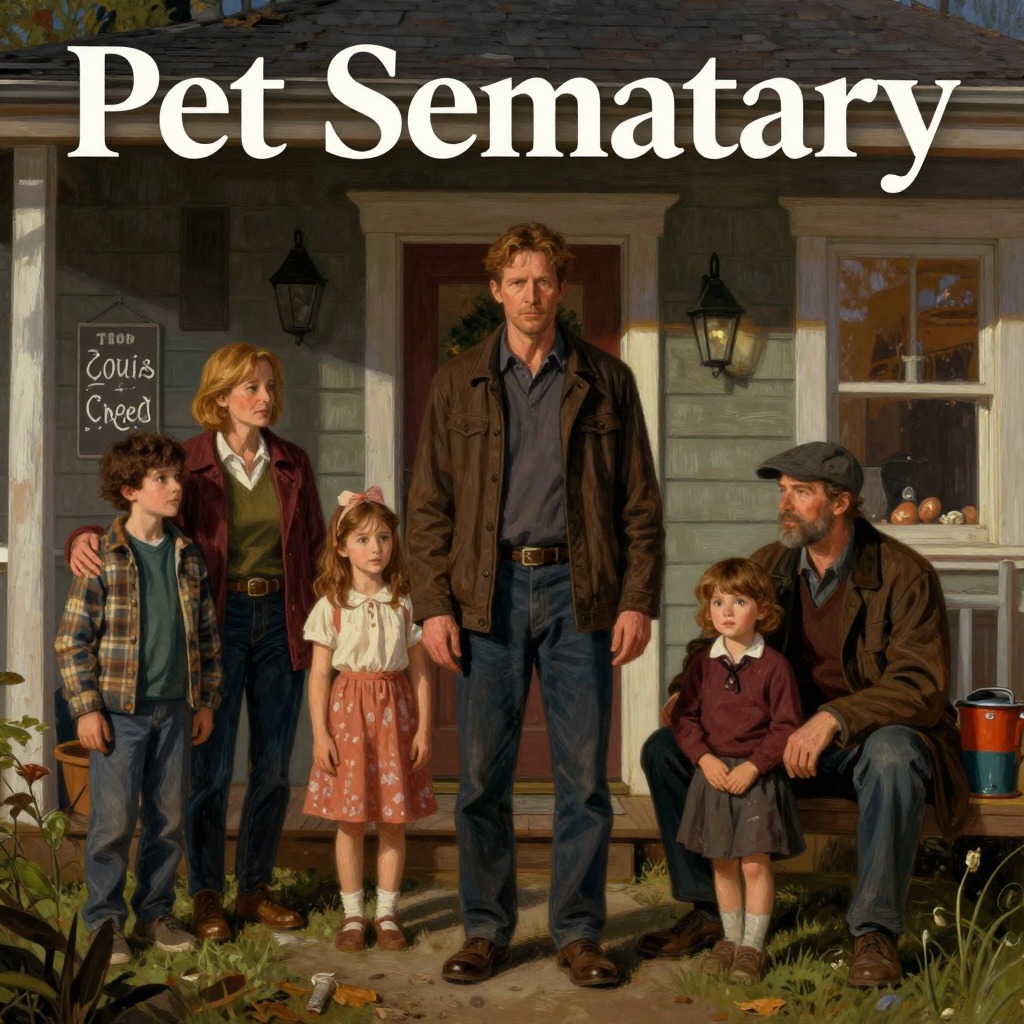
Louis Creed is a physician and family man whose life unravels after he moves his wife Rachel and their two young children, Ellie and Gage, from Chicago to the small town of Ludlow, Maine. He takes a position as head of the University of Maine's Student Medical Center, a job that brings him into contact with the dying student Victor Pascow, whose cryptic warnings about a forbidden burial ground foreshadow the horrors to come. Louis's rational, scientific mind—honed through years of medical training and practice—proves utterly inadequate against the ancient, malevolent power that lurks in the woods behind his new home. His journey from skeptical doctor to grief-stricken father to perpetrator of an unspeakable act of resurrection is the novel's central arc, a descent into madness driven by love, guilt, and the refusal to accept death's finality.
Identity and Background
Louis Creed lost his own father at the age of three and never knew a grandfather, a void that makes his later friendship with the elderly neighbor Jud Crandall all the more significant. He is a neat and methodical man, a trait reflected in his meticulous approach to his work and his hobby of building intricate model ships and cars. His marriage to Rachel is loving but marked by a deep, unspoken tension surrounding death, rooted in Rachel's traumatic childhood experience of watching her sister Zelda die a slow, agonizing death from spinal meningitis. Louis, as a doctor, views death as a natural, even necessary part of life—"the most natural thing in the world"—a perspective that clashes violently with Rachel's phobic avoidance of the subject. This fundamental disagreement about the nature of death becomes the fault line along which their family will eventually shatter.
Life and Plot Trajectory
The Creed family's arrival in Ludlow is immediately chaotic: Ellie falls from a tire swing, Gage is stung by a bee, and Louis cannot find the house keys. Jud Crandall appears to help, and a fast friendship forms. Jud introduces the family to the Pet Sematary, a children's graveyard for pets killed on the busy Route 15, and later, after Church is run over, he leads Louis to a more ancient, secret burial ground beyond it—a Micmac Indian site with the power to return the dead to life. Louis, acting on Jud's guidance and his own desperate love for his daughter, buries Church there. The cat returns, but it is changed: clumsy, foul-smelling, its eyes muddy and vacant, its purr-box broken. It kills birds and mice not for food but for sport. Louis suppresses his unease, rationalizing the cat's return as a misdiagnosis of death.
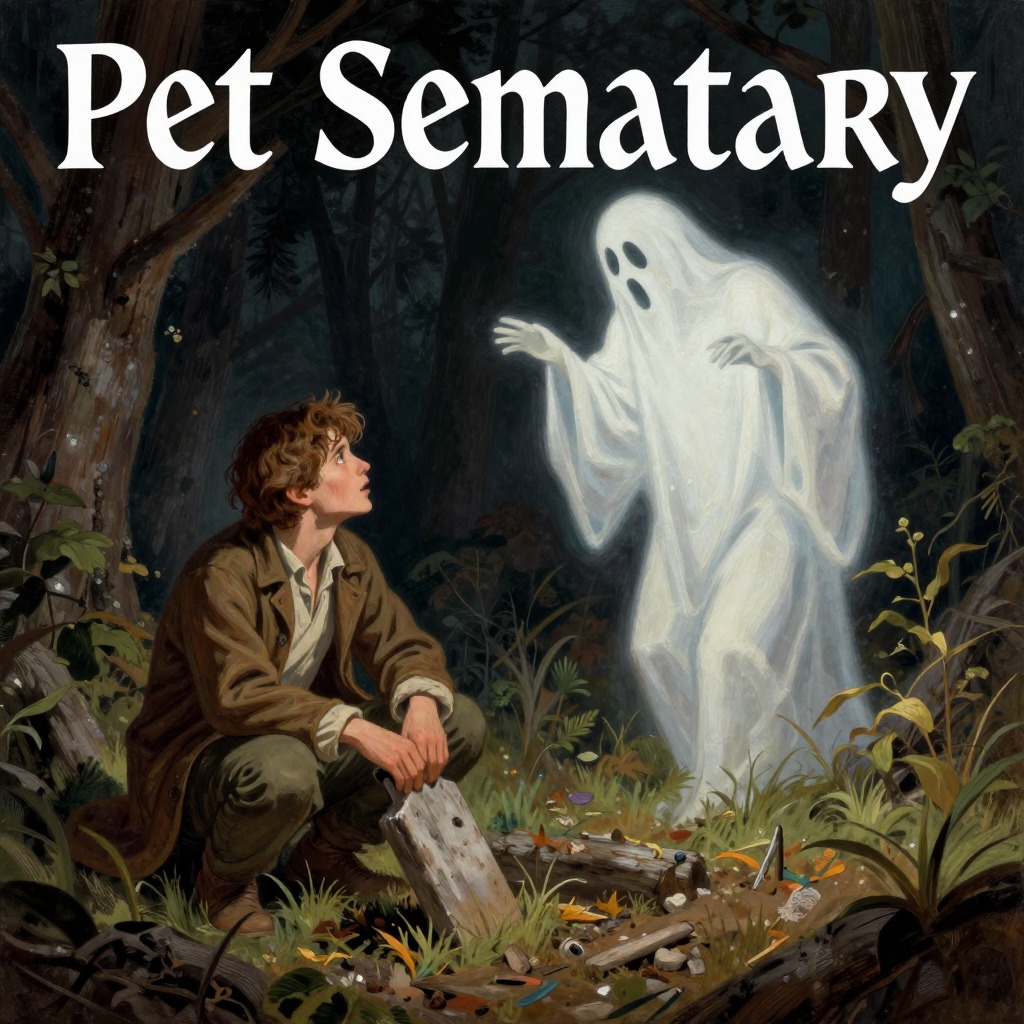
The true catastrophe strikes when Gage, chasing a toy, darts into the path of an Orinco truck. Louis, racing after him, feels his fingers brush the boy's jacket but cannot stop him. Gage is killed instantly, his body dragged for yards. Louis is consumed by grief and guilt, and the memory of Church's resurrection becomes an irresistible temptation. He sends Rachel and Ellie to Chicago, exhumates Gage's body from Pleasantview Cemetery, and carries it through the night to the Micmac burying ground, a journey that brings him face-to-face with the Wendigo, a monstrous spirit of the north woods. He buries his son and waits.
Key Actions and Objectives
Louis's primary objective throughout the novel is to protect his family, but his understanding of what that means becomes tragically perverted. His first major action is to have Church neutered, a practical decision meant to keep the cat close to home and prevent another confrontation with Rachel about death. His second is to follow Jud into the woods to bury Church, an act he frames as kindness to Ellie but which is also a surrender to the seductive power of the secret place. His third, and most consequential, is the exhumation and reburial of Gage. This act is not impulsive; it is a calculated, methodical plan executed with the same precision he would bring to a surgical procedure. He buys tools, checks into a motel under a false name, scales a cemetery fence, and digs up his son's grave. He does this knowing the risk, having been warned by Jud's story of Timmy Baterman, a resurrected soldier who became a murderous, knowing monster. Louis tells himself he will make a diagnosis: if Gage returns as a monster, he will kill him. But his love and grief have already blinded him to the truth that the place itself is evil, and that what comes back is never what was lost.
Relationships and Conflict
The central relationship in Louis's life is with his son, Gage. The bond is deep and physical—Louis carries him, bathes him, flies a kite with him on what will be their last perfect day together. Gage's death is the emotional earthquake that levels everything. Louis's relationship with Rachel is strained by their opposing views on death; her terror of it, born from Zelda's suffering, makes her unable to support him in his grief, and his secret actions drive an unbridgeable wedge between them. His friendship with Jud Crandall is the novel's most complex relationship. Jud is a surrogate father, a source of local wisdom and comfort, but he is also the man who introduces Louis to the Micmac burying ground, an act he later confesses may have been manipulated by the place's evil power. "I may have murdered your son with good intentions," Jud tells him. Louis's conflict is internal: between the rational doctor who knows death is final and the grieving father who cannot let go. This conflict is resolved not by wisdom but by madness, as he chooses to act on his darkest impulse.
Change and Ending
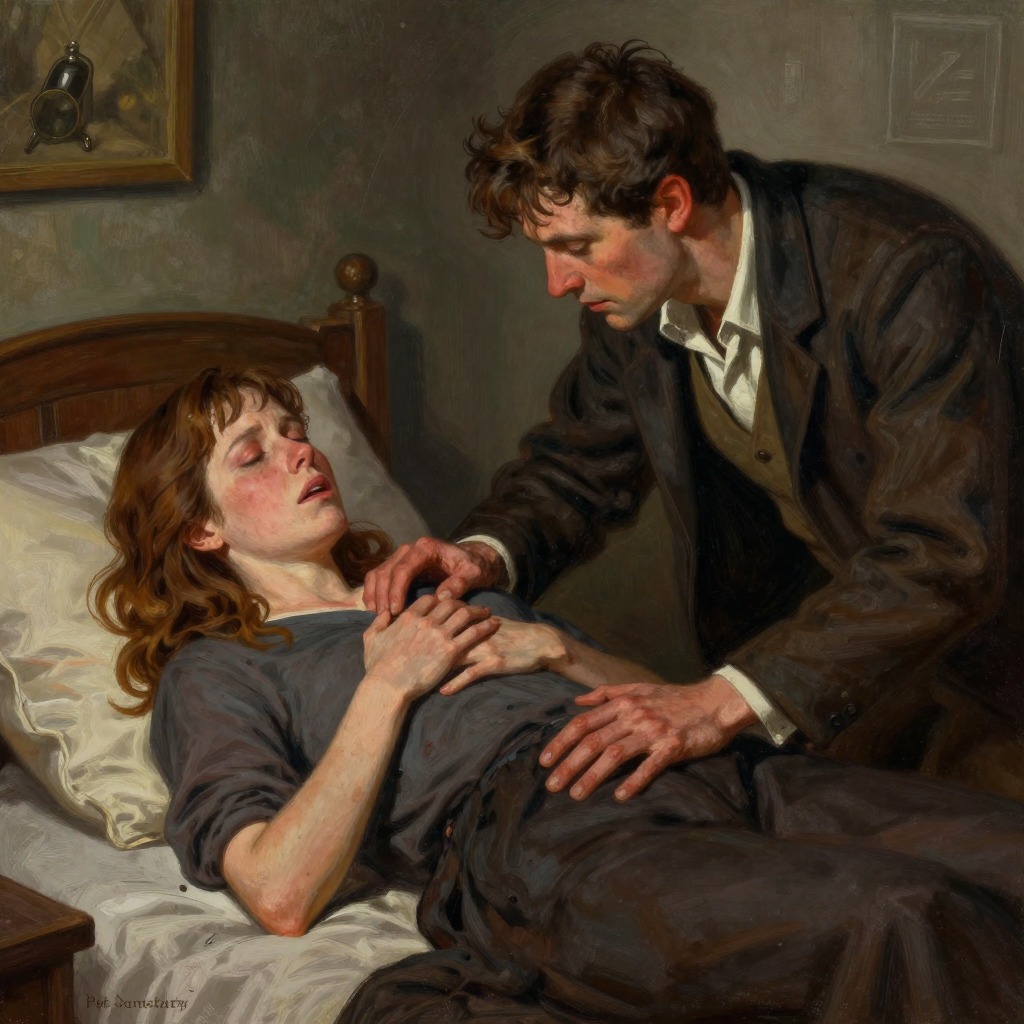
Louis Creed undergoes a complete psychological and moral transformation. He begins as a competent, compassionate physician and ends as a grave robber, a murderer, and a madman. After Gage returns as a murderous entity, killing Jud and Rachel with Louis's own scalpel, Louis is forced to kill his own son a second time, injecting him with morphine. He then wraps Rachel's body in a sheet, sets fire to Jud's house, and carries her to the Micmac burying ground, his hair turned white from shock. The novel ends with Louis sitting alone in his house, playing solitaire, when he hears the back door open and feels a cold hand on his shoulder. Rachel's voice, "full of dirt," says, "Darling." Louis has completed the cycle: he has resurrected his wife, and whatever has come back is not Rachel. His final act is one of utter, knowing despair, a surrender to the very force he tried to defeat.
Narrative Role and Evaluation
Louis Creed is the tragic hero of a horror story that functions as a modern myth about the dangers of tampering with death. His journey mirrors that of Orpheus, who descended into the underworld to reclaim his wife, only to lose her again by looking back. Louis's fatal flaw is not pride but love—a love so powerful it refuses to accept the natural order. King uses Louis's medical background to heighten the irony: a man trained to preserve life becomes its destroyer. His rational mind is repeatedly shown to be useless against the supernatural, and his final descent into madness is both horrifying and pitiable. Louis Creed is not a villain; he is a man who made a series of choices that any grieving parent might understand, and that is what makes his story so devastating. He is a warning, a cautionary figure whose fate is sealed the moment he decides that sometimes, dead is not better.